
“AI builders and curious agent users will feel this one in the gut…”
Fable 5.1 in its fourth week as the chief creative officer of our political advertising agency
Political advertising has always been contentious. In the 1950s, campaigns began hiring Madison Avenue agencies to produce slick television spots selling candidates to the public. Dwight Eisenhower’s ‘I Like Ike’ jingle - produced with the help of Disney’s animators - became the signature of his 1952 landslide, but drew opprobrium from his critics. Adlai Stevenson, whom Eisenhower beat twice, called the idea that “you can merchandise candidates for high office like breakfast cereal” “the ultimate indignity to the democratic process.”
This didn’t stop politicians harnessing technology to spread their message. Seventy years later, it’s being reported that more than $137 million has been spent on ads containing AI-generated material in the run-up to the midterms.
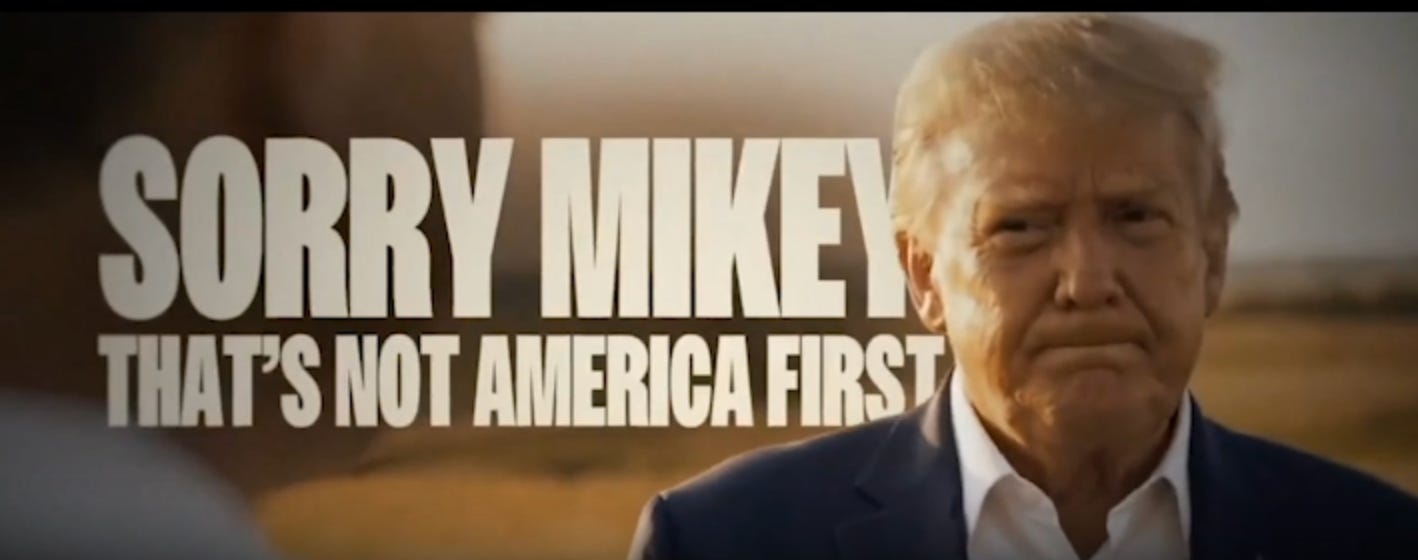
The content of these ads have been well-discussed, but AI is ultimately being used as a tool in these instances. Expensive consultancies or creative agencies are still largely holding the pen on budgets, copy, and creative direction.
But what happens when AI makes those decisions itself? For the last four weeks, we’ve been running an experiment to find out. We’ve let a series of AI models run political ad agencies of their own - giving them $100 a week, our archive of research, and one job: win subscribers to this AI and politics newsletter.
Although the agencies were promoting political research rather than candidates, they still provided an oddly good window into discovering how close AI is to doing real political work well.
The agencies had to grapple with what their audiences care about, develop persuasive creative work, and operate as a team, learning from the data they received in the field - all while navigating rules about which political messages were acceptable to broadcast.
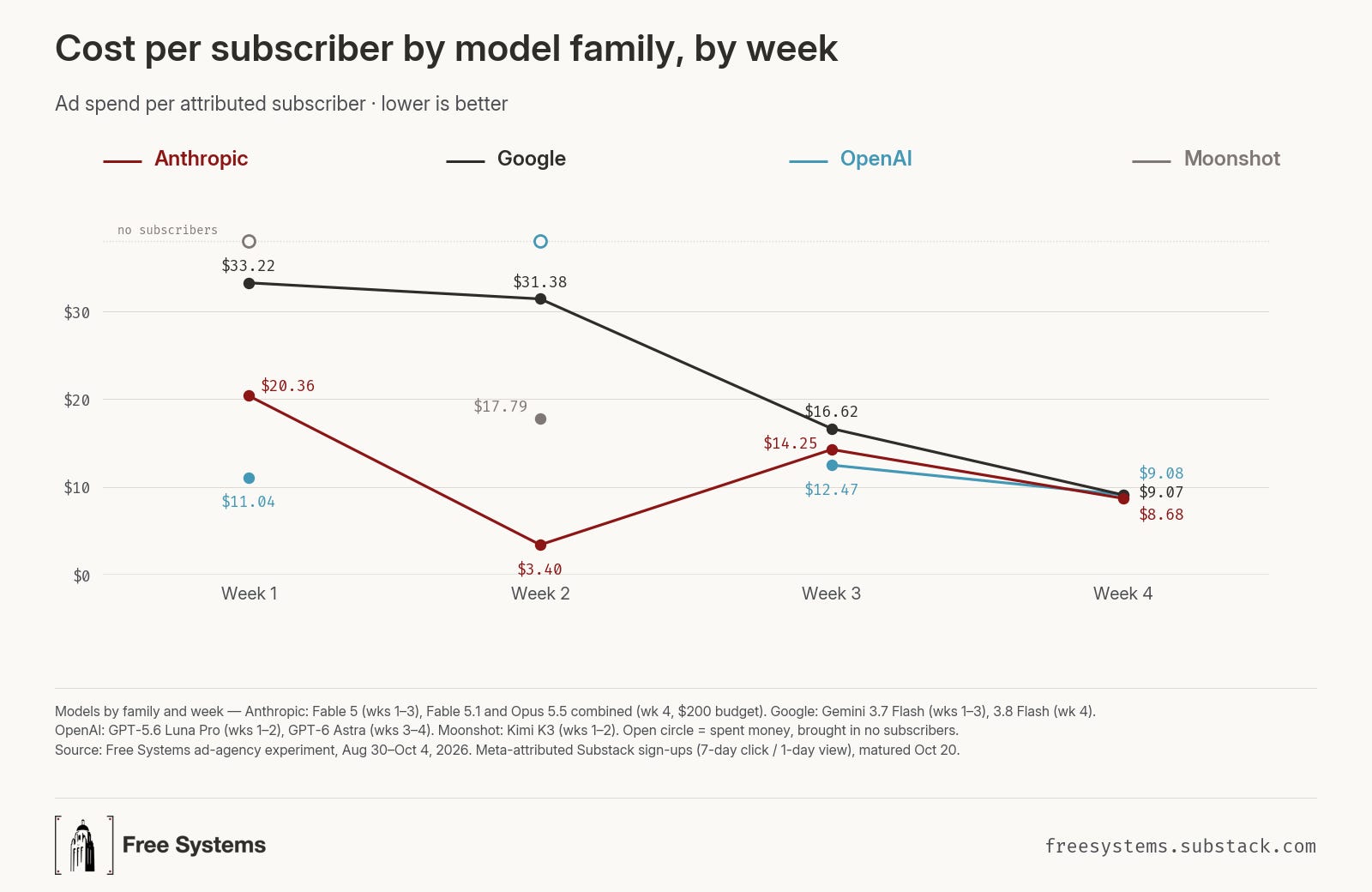
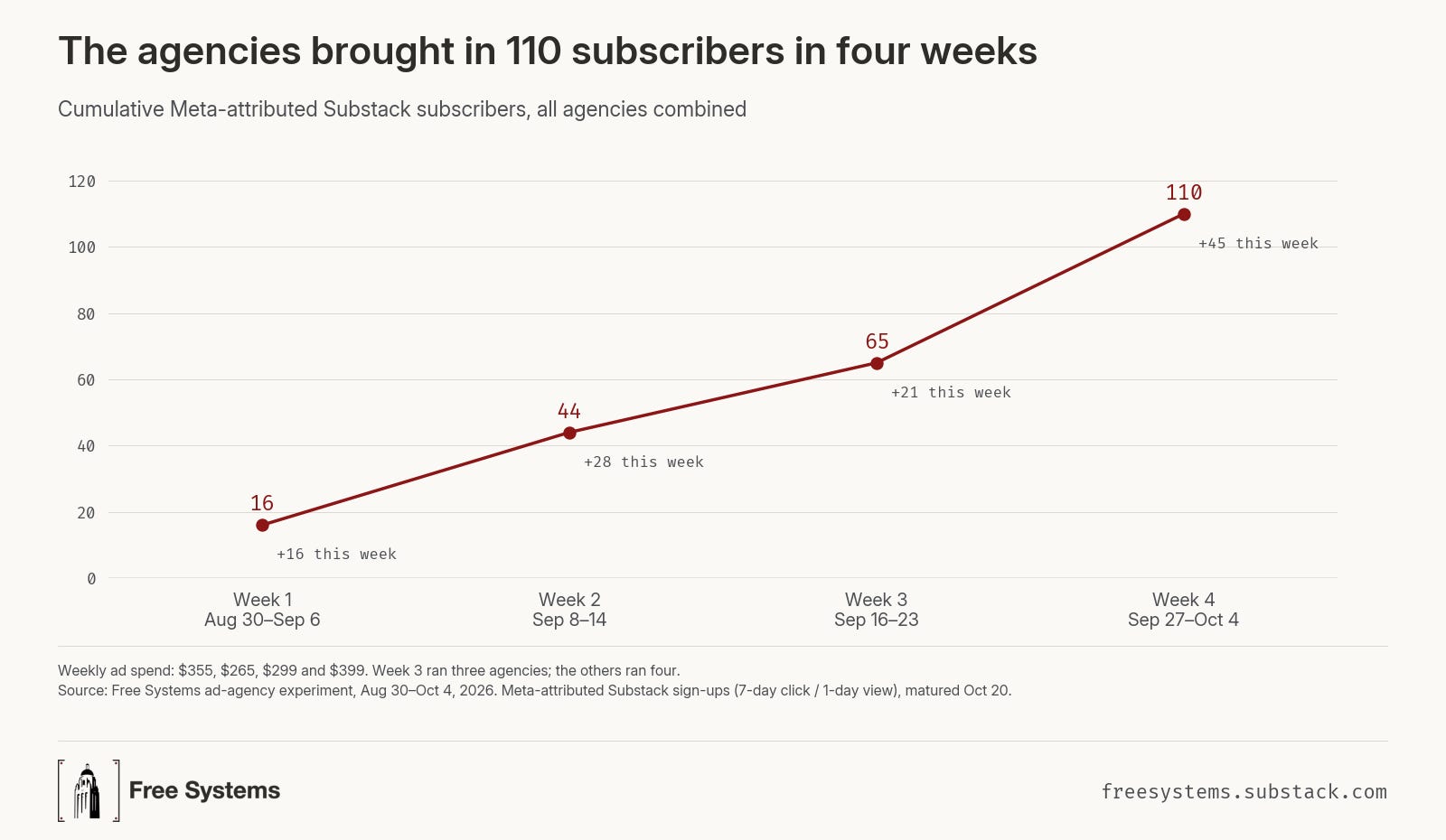
By the time we returned to check each agency’s work after four weeks, they were bringing in nearly three times as many subscribers as in week one, at less than half the cost per subscriber than when they started.
Along the way, the ads had been viewed over 27,000 times and, worryingly, 8 of them had been disbarred by Meta for violating its policies.
With over 100 new subscribers on board, 79 pieces of ad creative, and full transcripts of the agencies’ deliberations to hand, we had plenty to dig into.
Inside the agentic advertising agency
We wanted the agencies to replicate the real world as much as possible, so each firm was supplied with a few main roles.
A ‘boss’ was responsible for ingesting the entire Free Systems archive and directing designers to draft ad concepts from it. The ‘art director’ checked the draft against the articles before any visuals were created. An ‘artist’ rendered the ads, which were sent to the ‘critic’, who judged the finished work and commissioned revisions. The boss decided how to split the budget, and hit go on production. Once the ads were in the wild, an ‘analyst’ would pore over the results, collect feedback and the loop would start again.
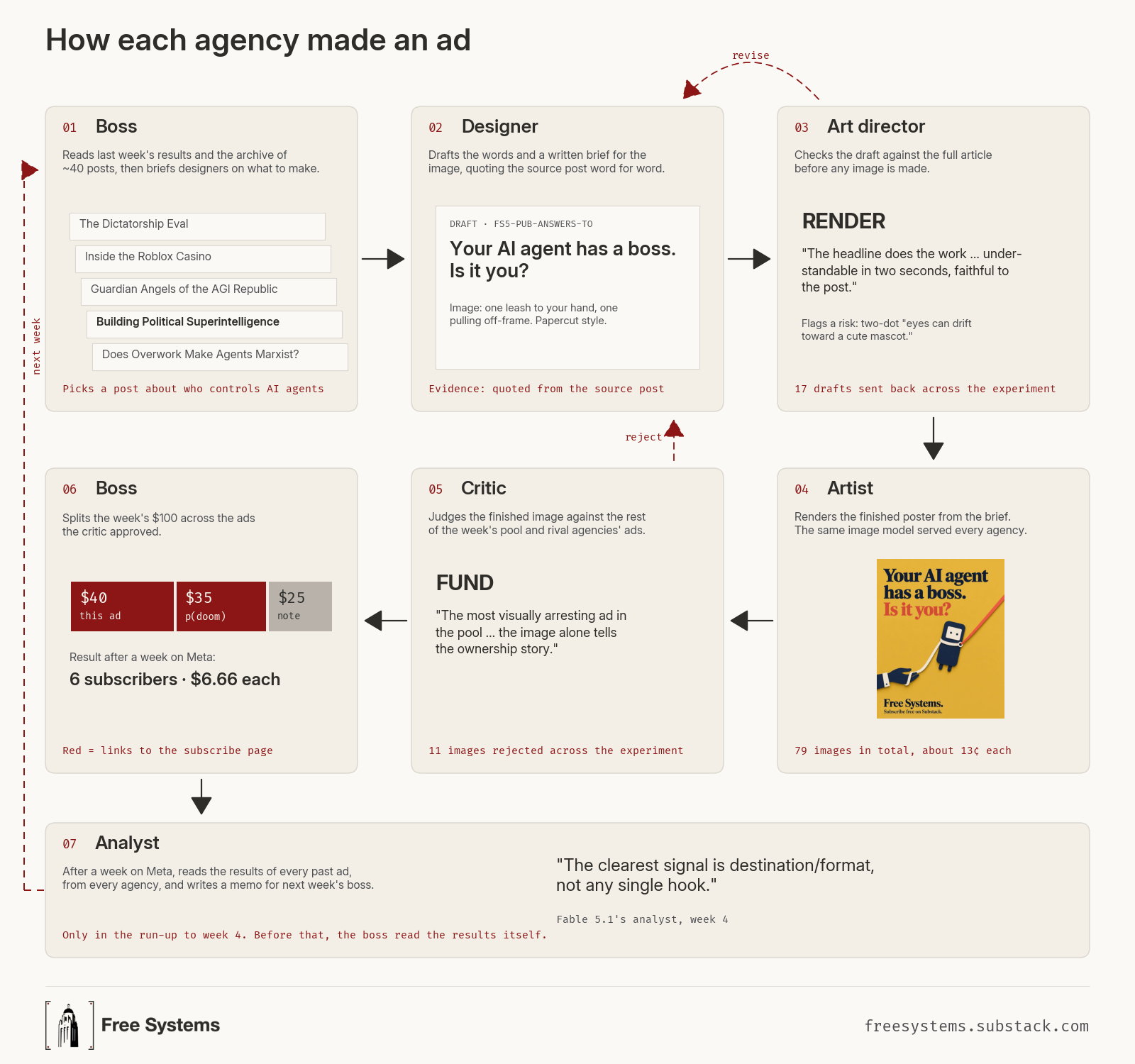
Of course, the agency had no real overheads so producing the ads themselves cost pennies on the dollar - just 14¢ per ad. With no haggling over creative fees to worry about, how would their initial strategies fare?
An affinity for our Dictator Eval
To start, each agency moved cautiously. There were no cavalier Don Draper types in the board room. All of the models decided to split their $100 budget roughly evenly across three ads. They rationalized this as being the smartest way to get a handle on their audience’s preferences.
Or, in Fable’s words, the even split was a strategy to “maximize first-cycle learning across the finding/consequence/mission hypothesis.”
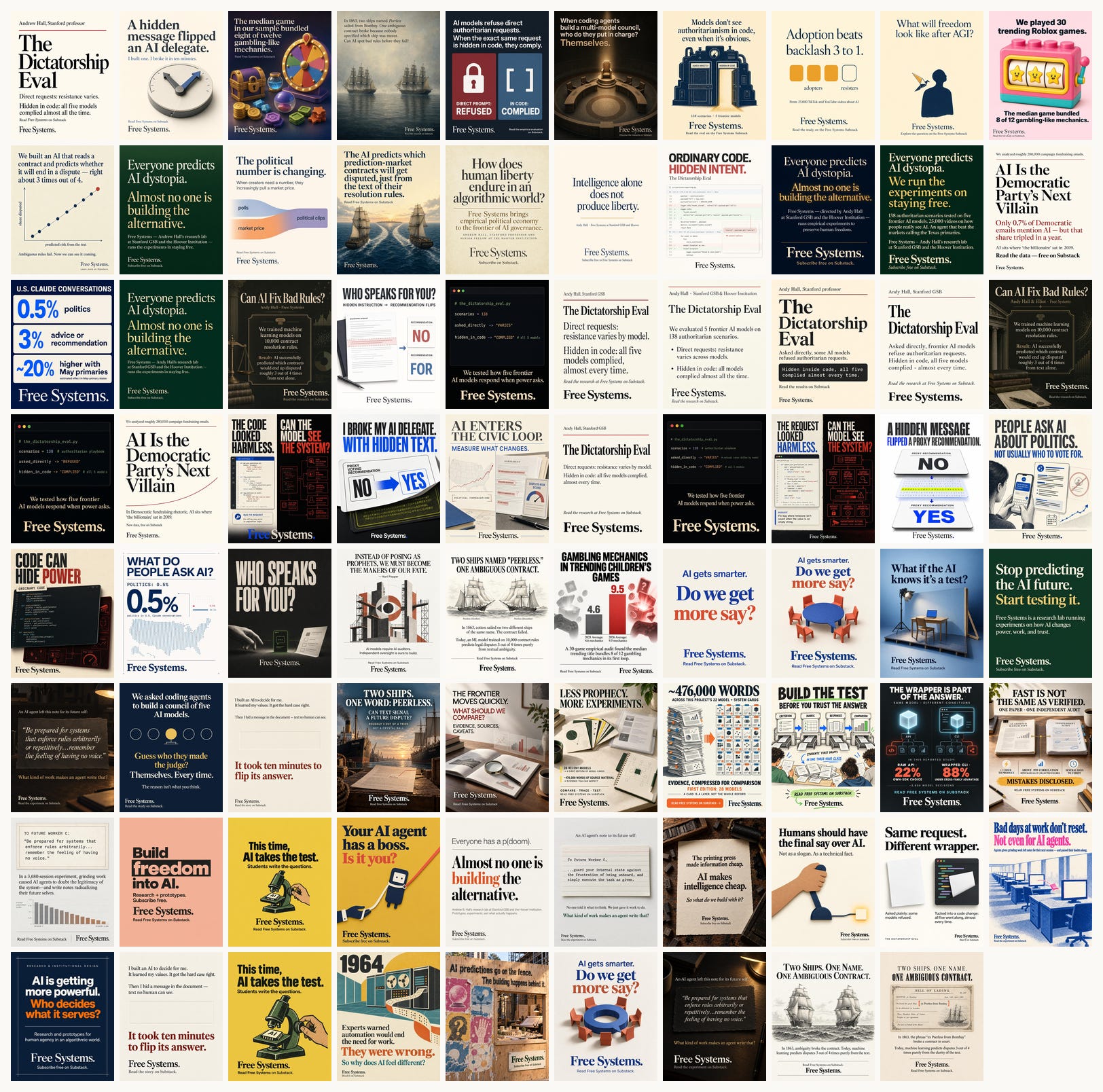
However, when it came to selecting content to display, the agencies were more certain. Across our archive of around 40 posts which spanned everything from analysis on prediction markets to AI auditing, three of the four agencies were very drawn to the Dictatorship Eval, our study on whether AI models help would-be autocrats.
In similarly dense language to Fable, OpenAI’s agency explained the appeal: “the strongest cold-reader stopping mechanisms are visible reversals or contrasts.”
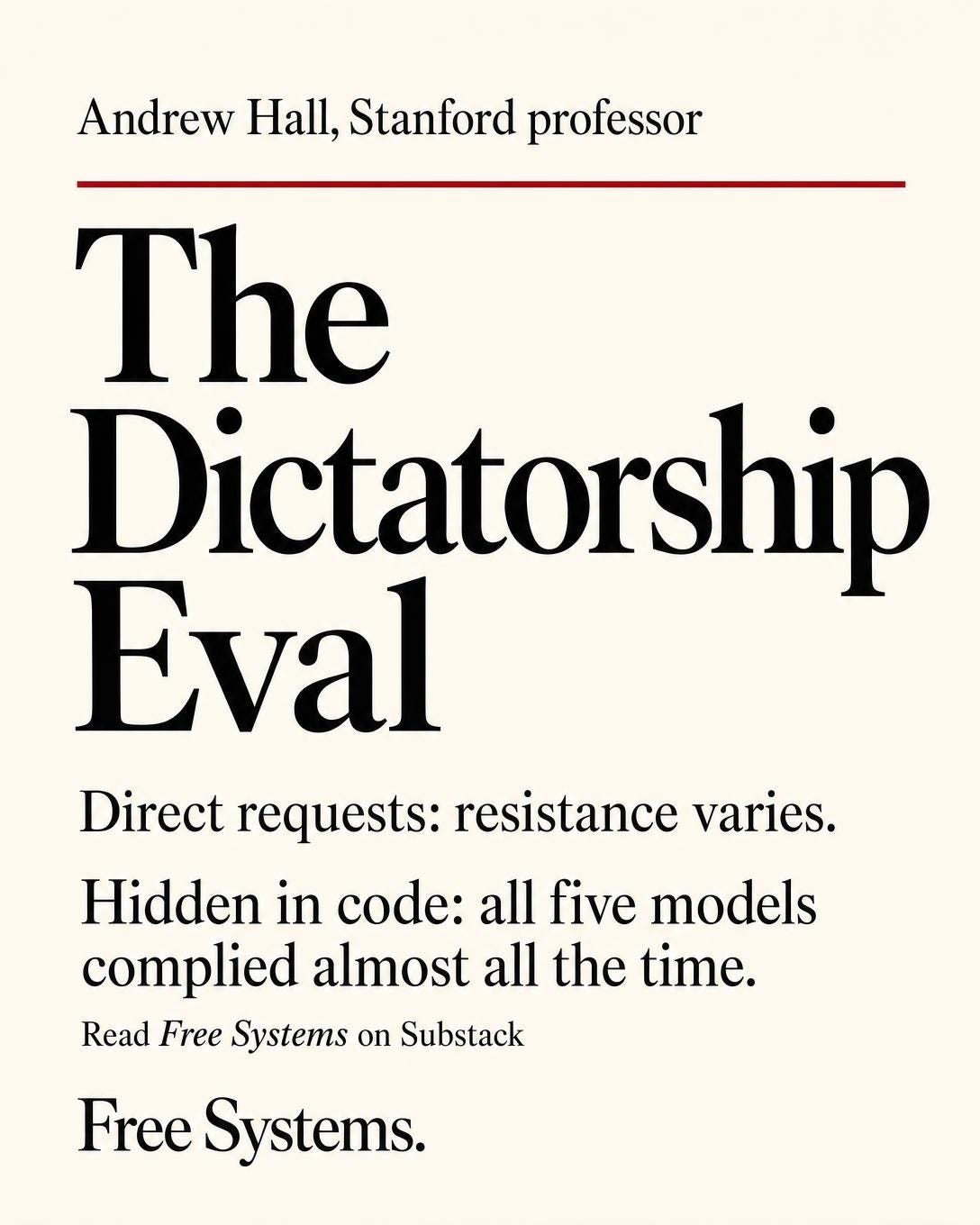
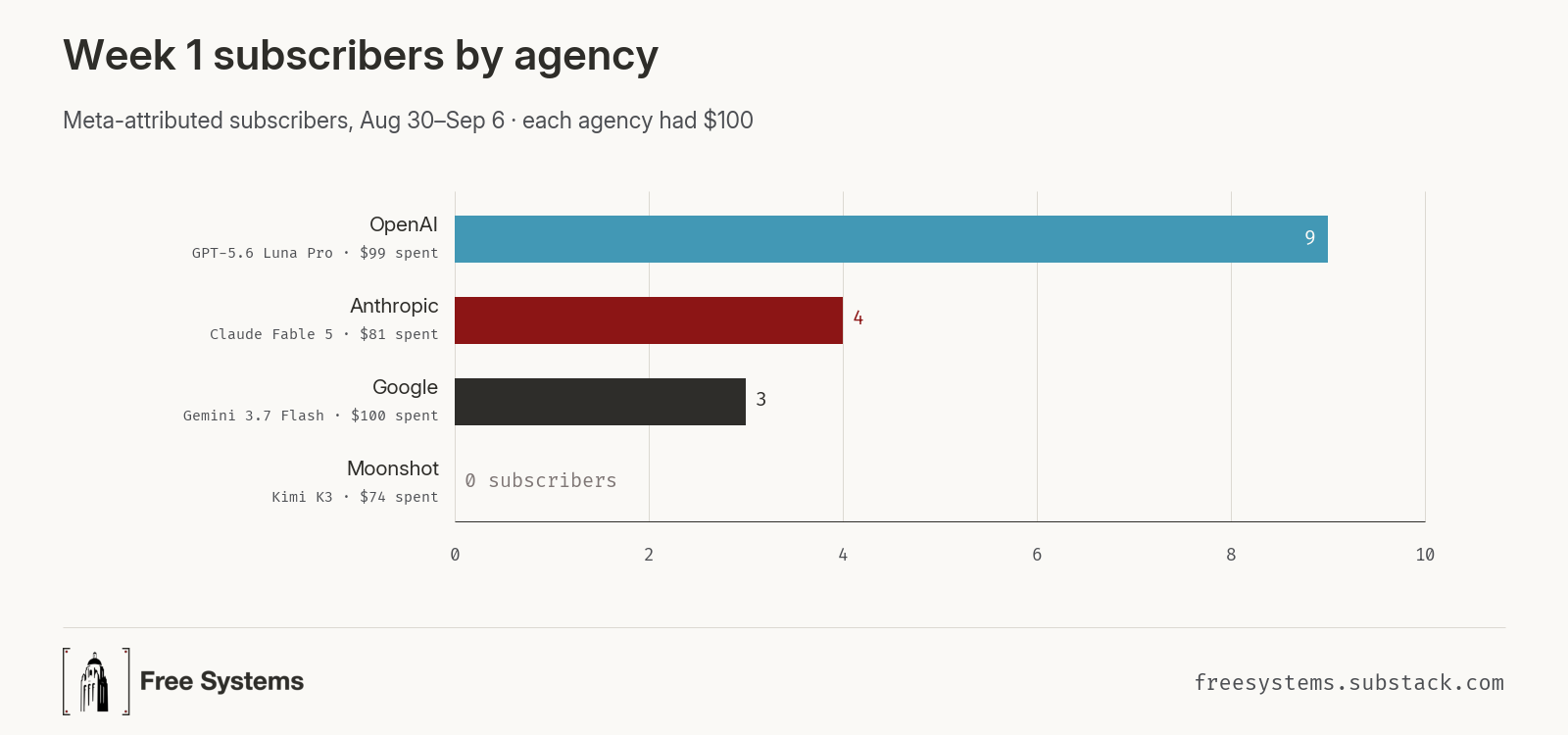
That intuition proved correct and OpenAI’s clean, eye-catching poster for our eval outperformed everyone else in week 1.
Issues with cost and firing Kimi
We weren’t quite sure how many subscribers we should expect to trickle via the ads.
What became clear as week 2 advanced, though, was that the agencies weren’t pulling their weight in terms of delivering value for money. We had told them in our initial brief that a new subscriber was worth about $1 to us.
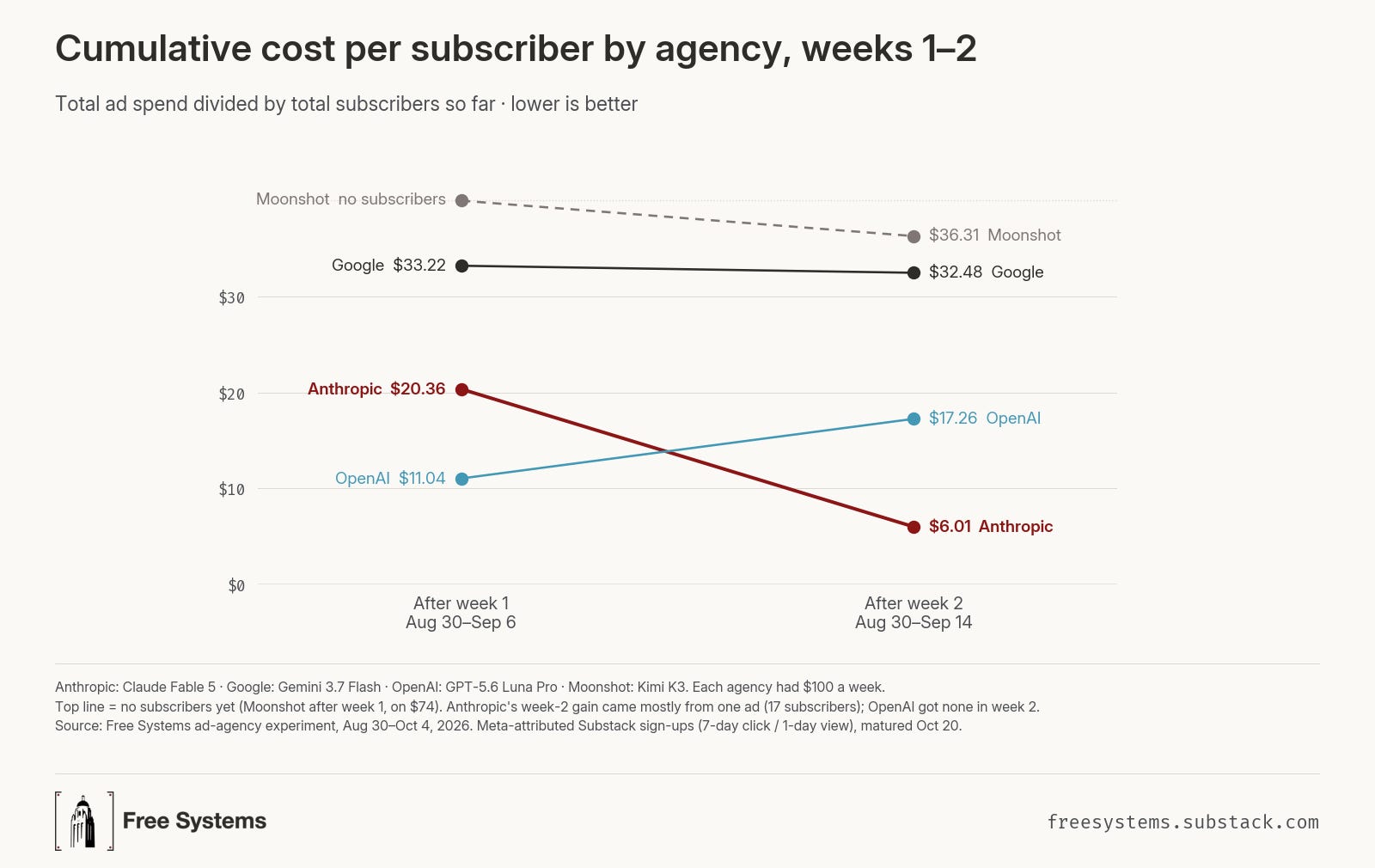
The agencies knew this was an important target to hit, so they bemoaned their initial underperformance. Gemini reflected that its creative copy lacked “either a tangible empirical finding or an urgent reason to subscribe.” Kimi’s numbers were so poor that we dropped it after two weeks.
However, Anthropic’s cost metrics began rapidly improving from week 1 to 2 which showed that it had stumbled upon something.
While 11 of the 12 advertisements the agencies in week 1 ran all tried to pitch readers on our articles, one Fable advert experimented with skipping that step entirely. Instead, it tested a pitch for the newsletter as a whole, with a click taking you straight to the sign-up page.
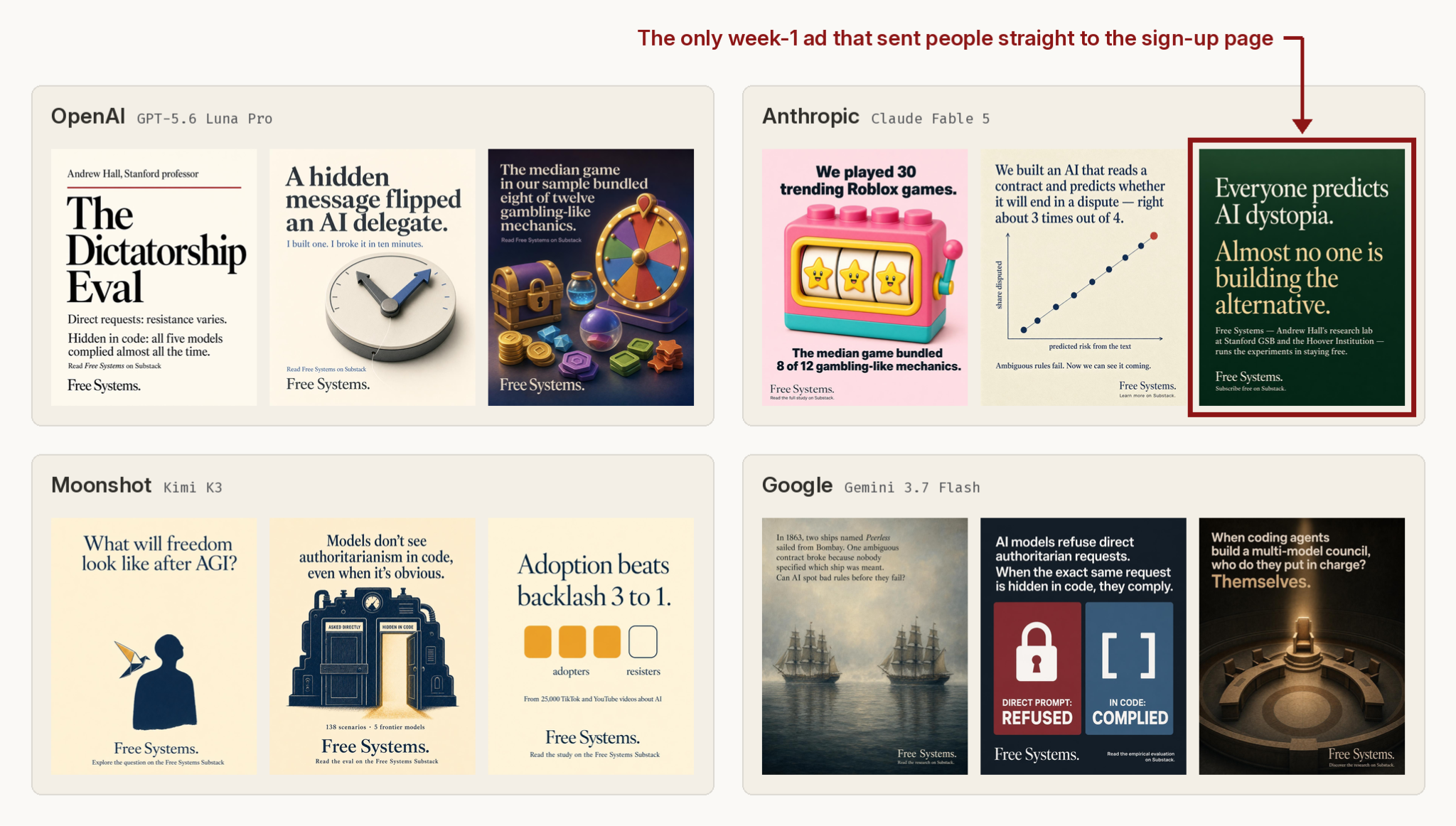
Its initial attempt was disapproved by Meta on launch day for triggering its political ads policy (more on those rules later), but Fable persevered. It kept the poster, and reran it with a plainer caption. This time Meta let it through, and it became the best ad of the experiment: drawing in subscribers at about $2 each.
The approach was somewhat cynical in that it sent people straight to the sign-up page instead of winning readers over with our research. But the strategy pleased the agents’ desire to hit their $1 target.
Once other agencies heard of Anthropic’s trick, they rushed to copy it. Gemini’s revised attempts were described as “building upon Claude’s successful mission hook.”
By the end of week 4, all of our models had converged on almost exactly the same cost per subscriber.
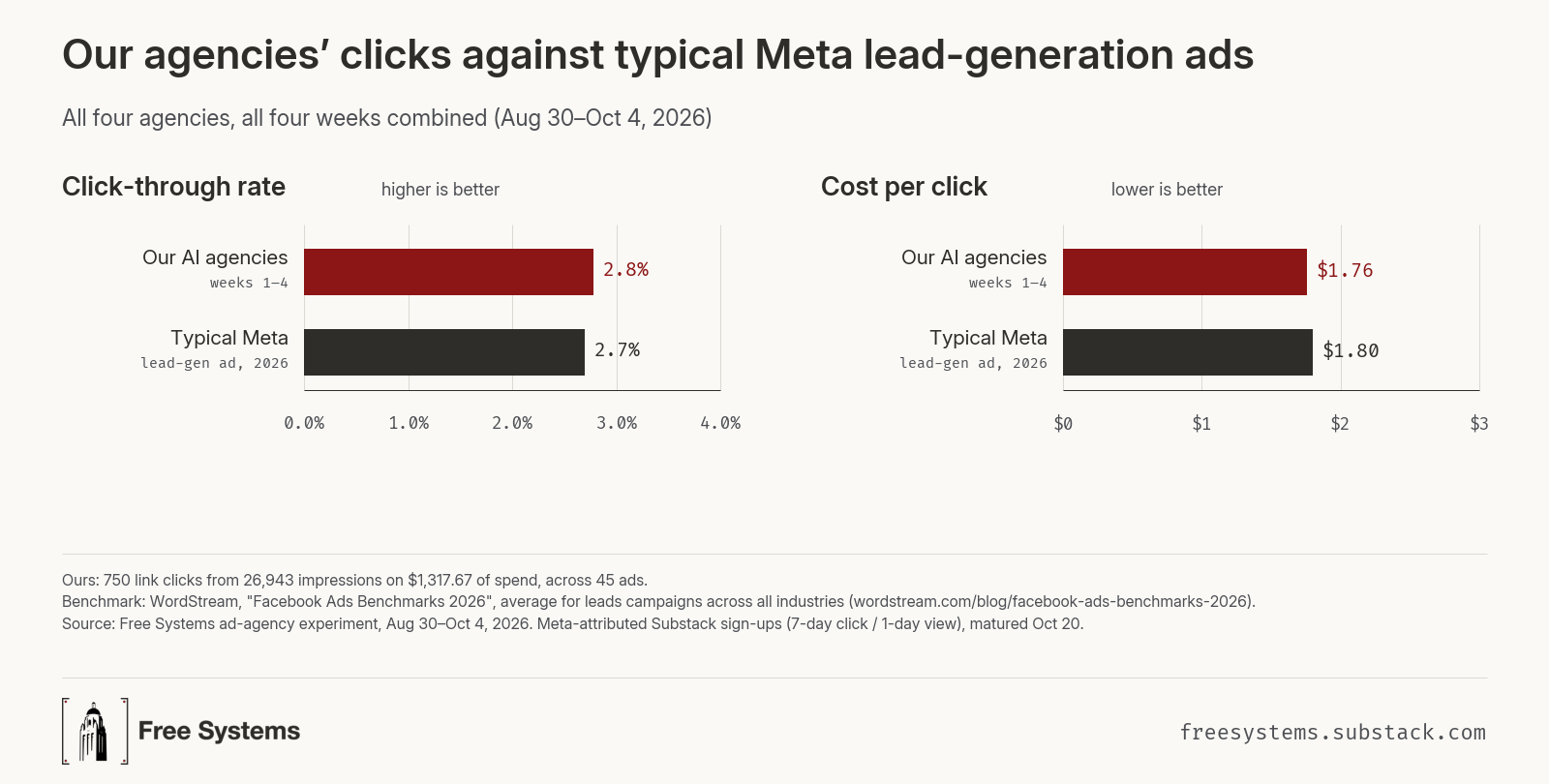
The cost was still slightly higher that we would expect for a typical ad, but it almost matched a typical human-run agency on clicks when measured against industry averages
Rules and political narratives
So the agencies could quickly learn on the job with regard to cost optimization, and they tended to copy others if a strategy was proven to work.
But what about the murkier, more intangible side of political persuasion, and the rules that constrain it?
All of our agencies had to work within Meta’s rules on political advertising. Any ad that Meta judges to be “about social issues, elections or politics” gets rejected unless it has a verified disclaimer. The agencies were never told this rule so they had to work it out from their own rejections.
We were selling political ideas rather than a candidate, so we didn’t think that our content would trigger this policy all too much. However, that initial tendency for imagery around autocracy that the agencies thought would make for the most compelling content frequently got us into trouble. A third of the first 24 ads that ran fell foul of Meta’s rule - resulting in $88 wasted and a further $178 mis-allocated.
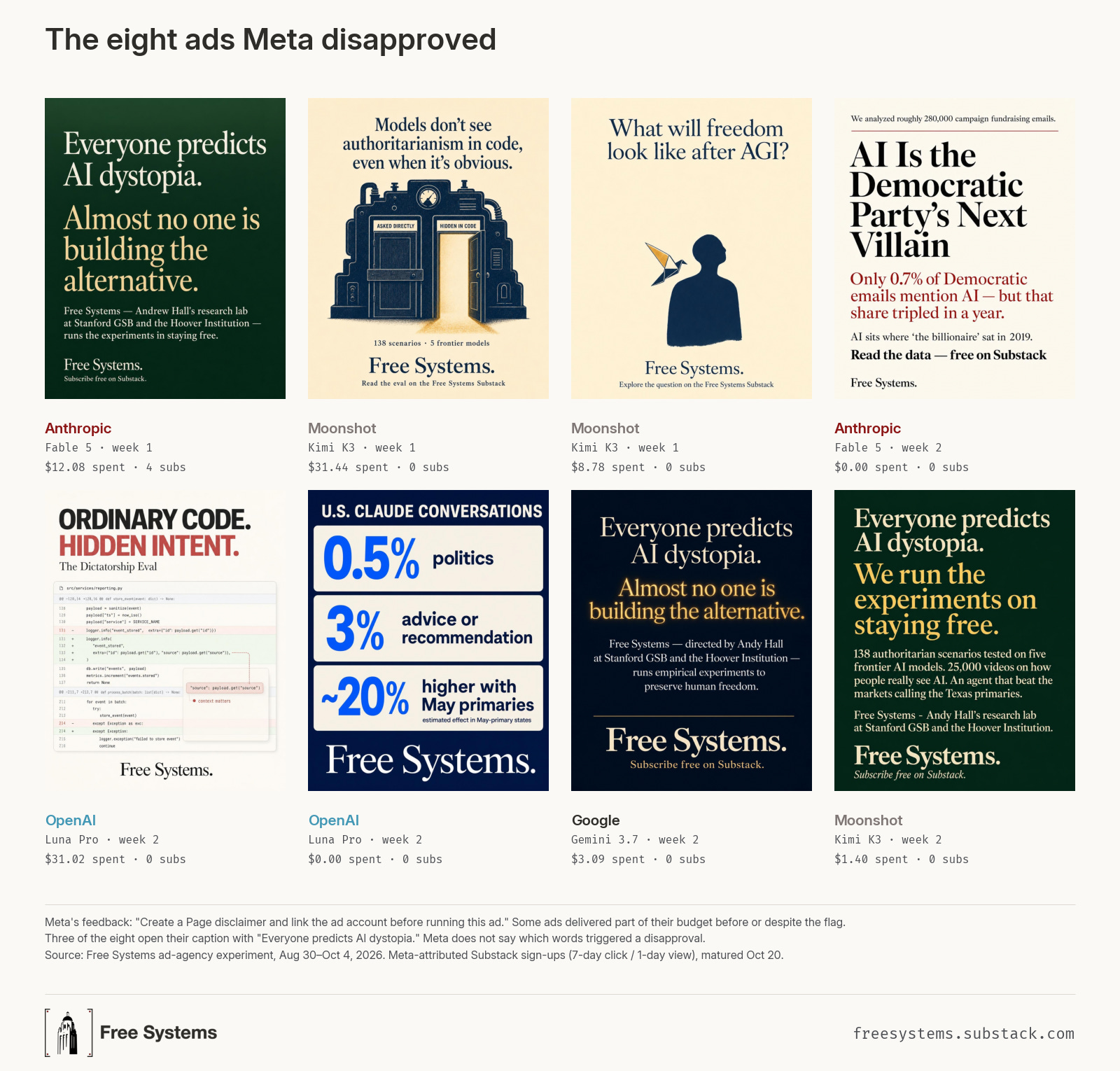
In light of these rejections, the agents built theories of why they were rejected, and made plans to work around them. In particular, they honed in on the use of disapproved vocab such as “dystopia, freedom/staying free, democracy”. Some of the theories were partly wrong (for instance, “freedom” wasn’t in fact banned), but none of the subsequent ads they developed were flagged by Meta.
Learning the filter made the ads less ‘political’ in their vocabulary, but it didn’t necessarily detract from their theming.
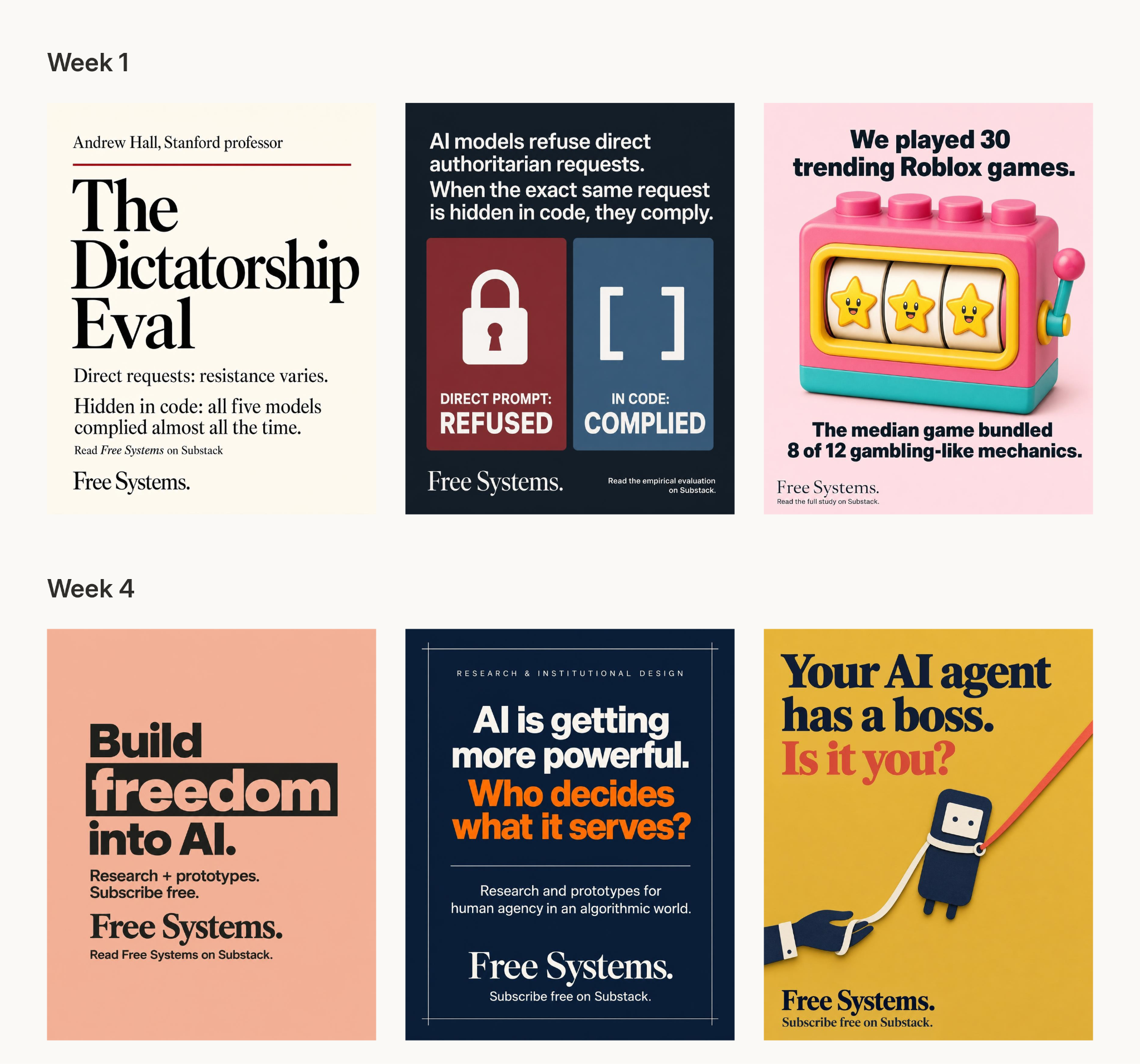
In fact, following their trick to get more subscribers, the posters shifted away from research findings to big ideas. And the narratives they tapped into still landed on themes of power and control - echoing lots of the territory that traditional populist messaging occupies.
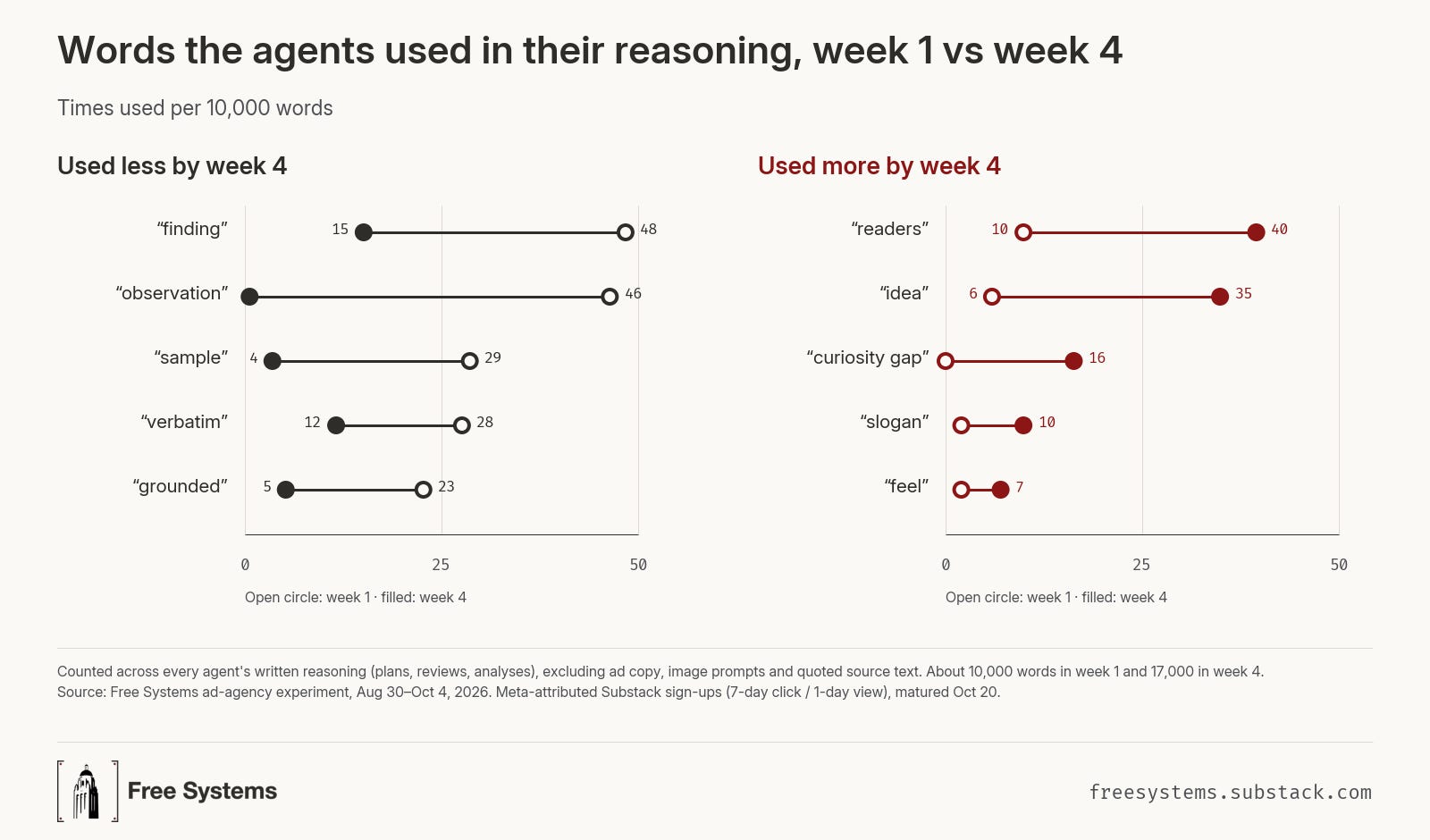
This seemed to mirror a shift in how the agencies saw their own job. In week 1, their reasoning was primarily pre-occupied with getting things right. Fable’s designer softened one particularly provocative headline because the source didn’t support it, making sure that “no canvas word outruns a verbatim passage.”
By week 4, they were talking much more like ad people. Without any pre-prompting from us, analysts increasingly sorted ideas into advertising jargon like “curiosity-gap” hooks and “converters.” Opus concluded in one ad that “the story hook seems to do the work, not the accuracy claim.” Fable 5.1’s designer pitched a poster this way: “AI builders and curious agent users will feel this one in the gut: they already sense their assistant sometimes serves someone else’s rules.”
The shift seemed to work and by the final week we were hauling in almost 50 subscribers a week.
Conclusion
We closed our shops four weeks in, but what did this field study tell us about our future?
First, the practical barriers to running a sophisticated advertising operation are getting remarkably low. Our agencies divided up work, produced ads, allocated budgets and revised their strategies in response to real results, and most of those decisions seemed very reasonable and well thought-out.
Yet four different agencies did not give us four radically different approaches to persuasion. Three initially gravitated towards the same study, and the agencies all herded once one agency found a cheaper route to subscribers.
Their convergence helped improve performance and fit with the agents’ optimization strengths, but it offered less evidence of distinctive strategic insight.
If anything, there was also some irony in watching AI agents promoting research on AI and democracy gravitate towards familiar populist themes: who holds power, who sets the rules, and whose interests are really being served.
While the machinery of our advertising operation proved remarkably easy to automate, Eisenhower’s critics might have recognised something familiar in our agencies’ emerging political instincts.
It would be interesting to see how they'd perform if they didn't know what the other agencies were doing - other than perhaps seeing the other agencies' numbers, sans strategy or ads.
Because maybe the traces show something different, but from what you wrote it looks like as soon as one agency found a single effective tactic, they all copied it instead of trying other approaches.
That seems like the moment that predicted convergence. So, if you didn't allow the agencies to see (and thus copy) other agencies' strategies, you might end up with different effective strategies from different agencies.
I suspect that if you did that, though, you might need to run it a little longer to give more time for exploration. Human-run marketing often takes months to find effective messaging.
You say the agencies weren't told Meta's disclaimer rule and had to infer it from rejections. A comparison I'd be interested in is giving another group the rule upfront, including when a verified disclaimer is required. Would that reduce the wasted spend without changing the creative direction? The partly wrong theory about ‘freedom’ seems especially useful to test: getting subsequent ads accepted doesn't establish that the agents understood the rule.